
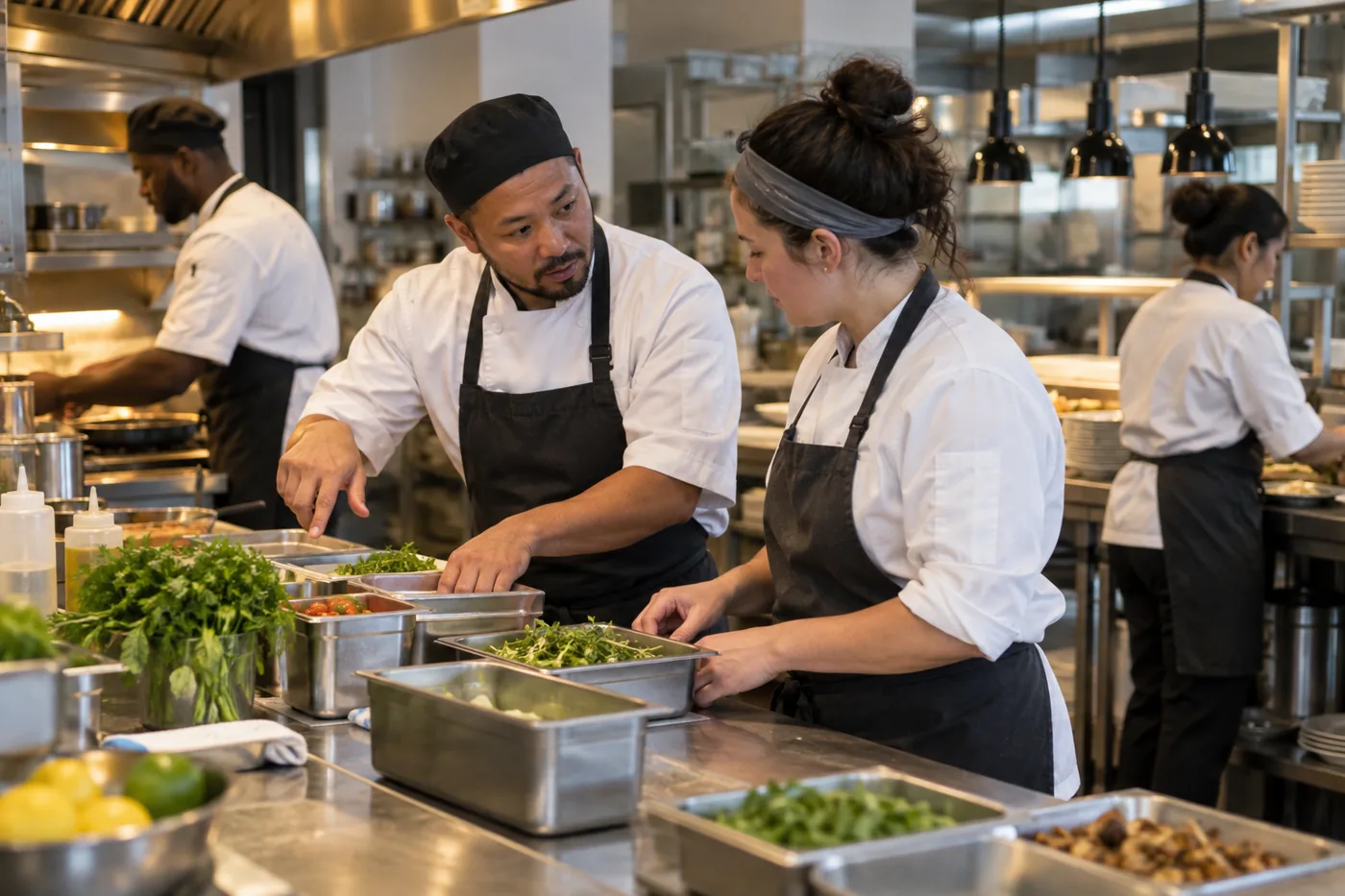
Start with the role: “restaurant work” may mean prep, line cooking, dish, porter, counter or front-of-house service. Confirm duties, kitchen pace, shift, pay basis, tip expectations where relevant and who supplies required clothing or tools.
Match experience to the station
Prep work may require consistent knife work and batch preparation. Line cooks need station knowledge and speed during service. Dish and porter roles involve sanitation, waste handling and repeated lifting. Counter and dining-room roles add customer communication and payment procedures. State what you have actually done and what training you need.
Schedule details matter
Restaurants can use split shifts, late closes, weekend schedules and variable end times. Ask when paid work begins, how breaks are handled, whether a trial is paid, and how schedules are communicated. Verify the worksite; do not assume it is near the agency office.
Pay and tips
Ask whether the role is hourly, salaried or tip-eligible and how tips are distributed. Current wage rules can change and depend on the role, so use New York State and NYC official sources rather than an old blog post. Keep your own record of hours and pay statements.
Safety and respect
Confirm slip-resistant footwear, heat and knife procedures, lifting expectations and the person responsible for training. A busy kitchen is not an excuse to ignore hazards or harassment. Know the worksite contact and the agency contact when the placement is temporary.
Describe volume, not just years
Two cooks with the same years of experience may have worked very different services. Explain the station, approximate covers, menu style and whether you handled opening, closing or prep lists. Dish and porter applicants can describe machine type, volume, sanitation and closing responsibilities. This detail lets a recruiter judge transferability without inflating a title.
Food safety and training
Follow the worksite’s approved procedures for handwashing, temperature control, allergens, cross-contamination and cleaning chemicals. Do not rely on an old habit when the current kitchen trains a different procedure. Ask which certifications are required for the specific role and do not claim a credential that has expired.
Trials and stages
If asked to demonstrate skills, clarify duration, duties, supervision and compensation before beginning. A short interview conversation is different from productive work during a service. Keep a record of the arrangement and ask who authorizes time.
First-week checklist
- Station and duties are clear
- Schedule and end-time expectations are understood
- Timekeeping and tip policy are explained where relevant
- Uniform, footwear and tool expectations are confirmed
- Safety and allergen procedures are provided
- Supervisor and call-out contact are saved
Common questions
Should I bring my own knives? Only after confirming the kitchen’s policy and safe transport.
What if the role differs from the interview? Ask the supervisor and agency to clarify before the mismatch becomes routine.
Does restaurant experience transfer between cuisines? Many skills do, but equipment, pace, menu and station organization can require training.
How to compare two restaurant offers
Write down station, typical shift length, closing duties, weekly schedule, pay basis, tip policy where relevant, commute and expected start date. Ask whether hours change seasonally and how schedules are posted. A role with a slightly lower hourly rate may be more useful when hours are predictable, the commute is reliable and the station matches your experience.
Also compare learning and strain. A worker trying to move from prep to line work may value structured training, while someone balancing a second job may need fixed end times more than advancement. Neither priority is universally correct. The important step is to compare verified terms rather than a restaurant name or a promise of “many hours.”
Editorial judgment
The best placement is specific enough to protect both sides: station, skill level, service volume, schedule and pay. A broad promise of “restaurant jobs available” is less useful than one verified opening with complete terms.
Sources checked
- NYC Worker Bill of RightsChecked September 28, 2026
- New York State minimum wageChecked September 28, 2026